

At this year’s World Cities Summit, a clear theme emerged across Temasek Trust’s engagements: urban challenges require more than funding. They demand trust, strong institutions, and cross-sector partnerships to turn capital into practical, scalable solutions for more liveable and resilient cities.
Cities drive much of the world's economic activity and are home to over half of its population. Yet, many urban challenges remain underfunded, not because capital is lacking, but because the trust, governance, and enabling mechanisms needed to channel it effectively are often missing.
This theme was explored during the World Cities Summit (WCS), a global platform that brings together government leaders, industry experts, businesses, international organisations, and academia to address urban challenges, share solutions, and foster partnerships for more liveable and sustainable cities. Organised by Singapore’s Centre for Liveable Cities (CLC) and the Urban Redevelopment Authority (URA), the biennial Summit took place from 14 to 16 June in Singapore.
Temasek Trust supported WCS as a Strategic Partner.
Unlocking Capital for Urban Solutions
Speaking on the “If the Capital Exists, Why Aren’t Cities Getting It?” panel at WCS, Mr Benedict Cheong, Chief Systems Integration Officer, Temasek Trust, highlighted that cities are where many of today’s biggest pressures are converging — from climate risk and ageing to inequality, migration, and infrastructure strain. Yet the challenge is often not a lack of capital for cities, but the conditions needed to channel it effectively.
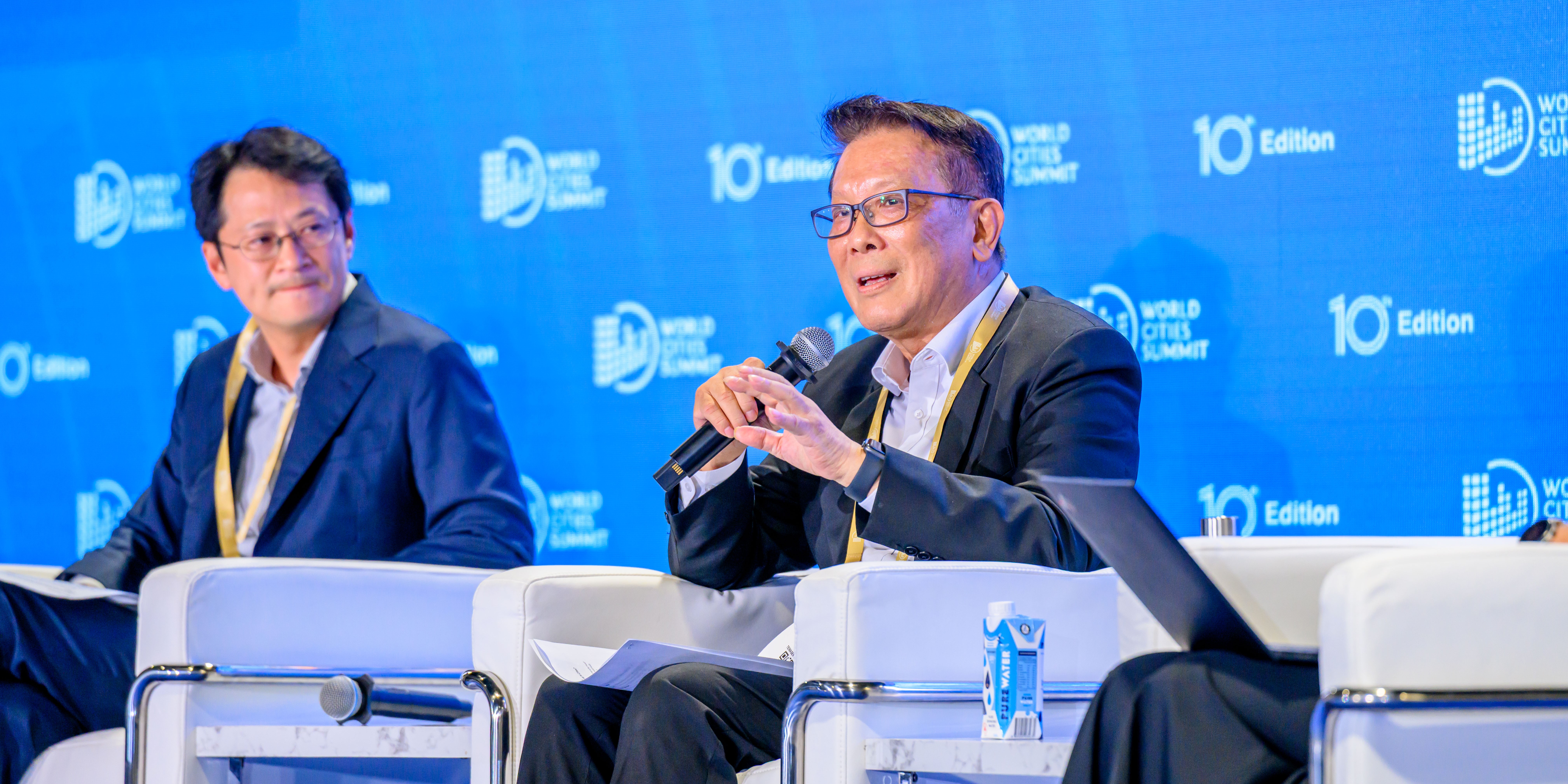
Benedict Cheong, Chief Systems Integration Officer, Temasek Trust, speaking during the “If the Capital Exists, Why Aren’t Cities Getting It?” panel at the World Cities Summit 2026
He noted that urban issues such as housing, resilience, mobility, and community wellbeing are deeply interconnected, while funding and policy responses often remain fragmented. This makes it harder for capital to flow to where it is most needed.
In this context, philanthropy can play a catalytic role by helping to de-risk innovation, strengthen institutions, and convene partners across sectors.
“Philanthropy is not here to fund the gap. We are here to help create the conditions under which commercial and public capital can flow to cities,” said Benedict.
Lasting progress, he added, depends on building the trust, governance, and momentum needed for solutions to scale, so that public and private capital can follow.
"With collaboration across sectors, we can also catalyse the innovation that makes cities more sustainable, equitable, and resilient, for this generation and the next."
— Benedict Cheong, Temasek Trust
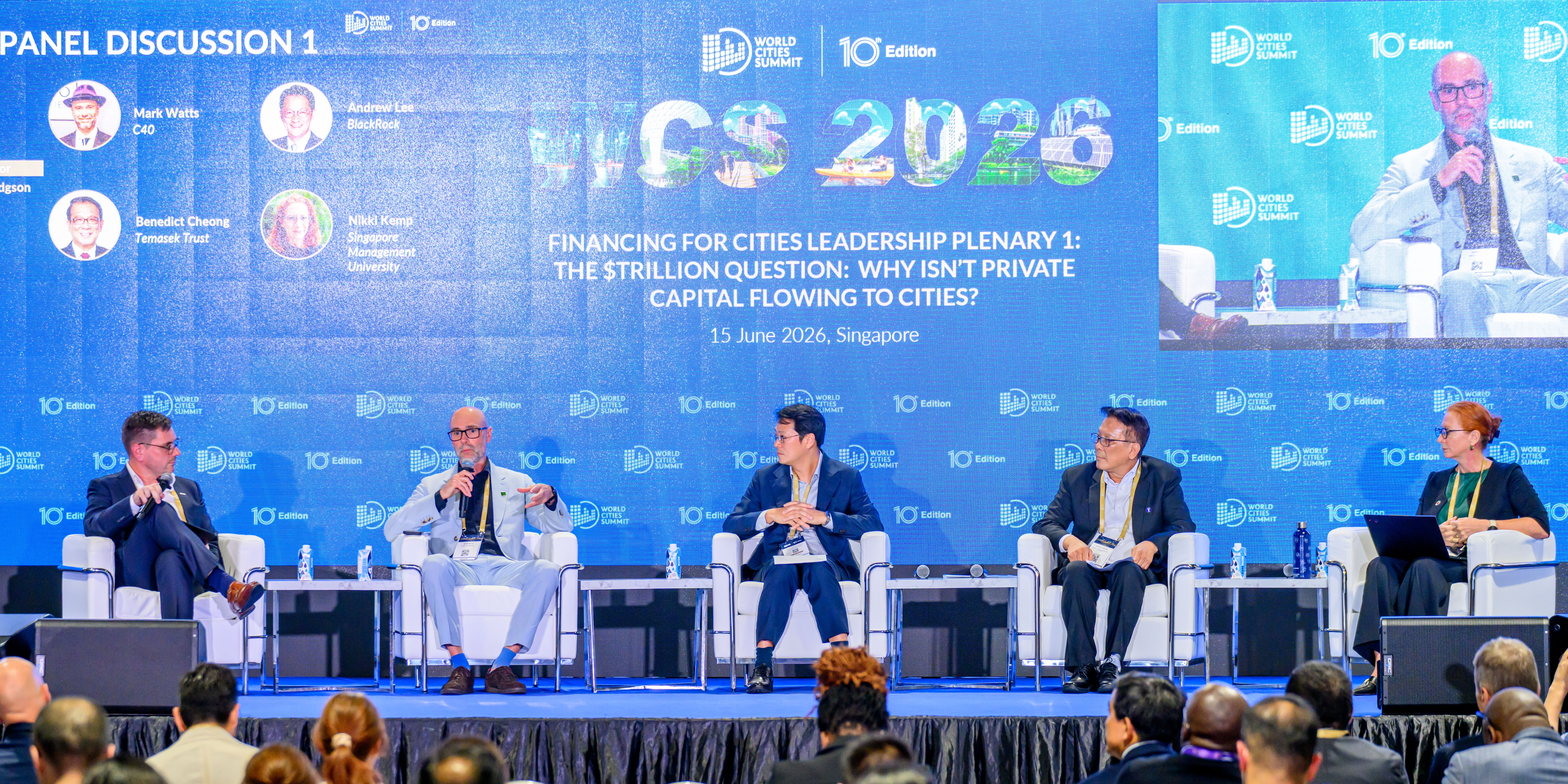
[From left to right] Moderator Andy Hodgson of ARUP with panellists Mark Watts of C40, Andrew Lee of BlackRock Private Markets, Benedict Cheong of Temasek Trust, and Nikki Kemp of Singapore Green Finance Centre, SMU
The Power of Trust in Building Resilient Cities and Communities
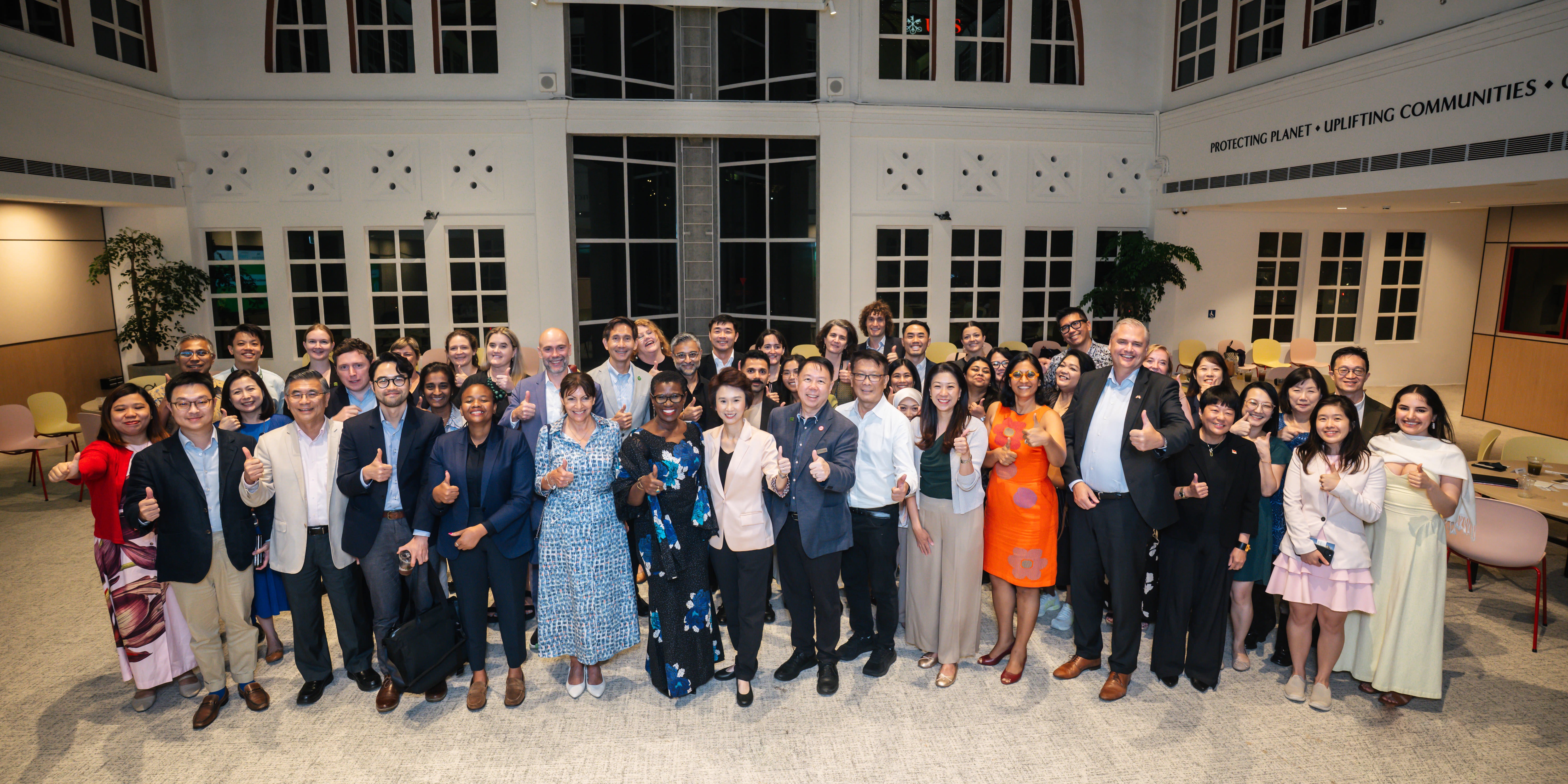
On the sidelines of WCS and Singapore International Water Week, Temasek Shophouse (TSH) co-hosted the Executive Climate Leadership Dialogue alongside the Centre for Liveable Cities and C40 to accelerate practical climate action in cities. The dialogue brought together about 50 mayors, government representatives, philanthropic organisations, regional institutions, and solution providers.
During her opening remarks, Ms Yvonne Tay, CEO, Temasek Shophouse, and Lead, Workplace & Community, Temasek Trust, shared how TSH has served as a trusted convener since 2019, bringing together stakeholders across the public, private, philanthropic, and people sectors to exchange ideas, forge partnerships, and advance solutions to shared challenges.
Many of these connections have evolved into collaborations spanning areas such as climate resilience, youth development, and regional research.
“We have seen firsthand how meaningful conversations can lead to strengthened collaborations, and how collaboration often becomes the catalyst for lasting impact,” she said.
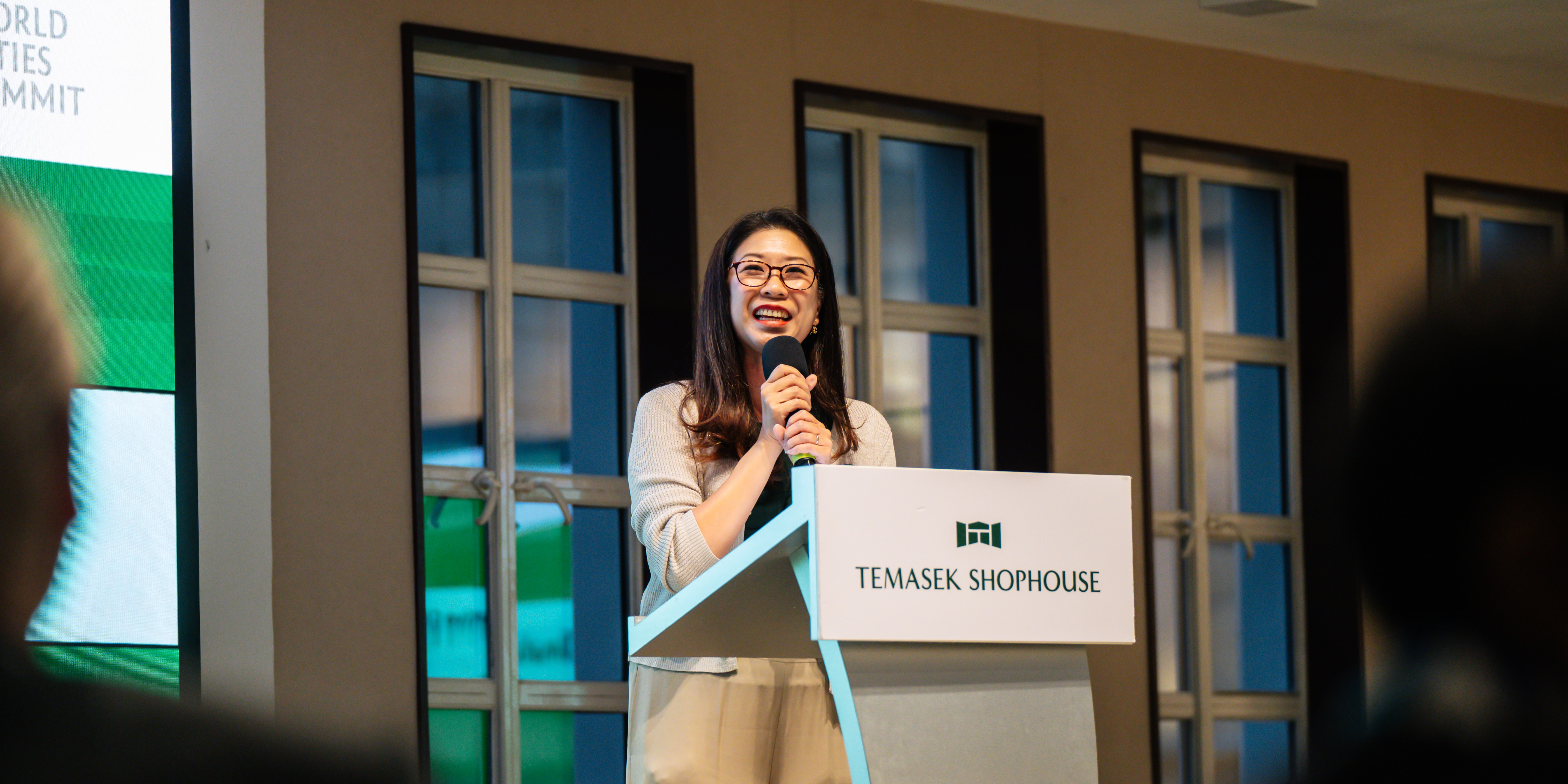
Ms Yvonne Tay, CEO, Temasek Shophouse, and Lead, Workplace & Community, Temasek Trust, opening the Executive Climate Leadership Dialogue at Temasek Shophouse
Yvonne underscored the importance of trusted spaces where diverse stakeholders can build relationships, align around common goals, and learn from one another.
Reflecting on the role of trust and community in shaping resilient cities, she noted:
"Cities are powered as much by social capital as physical infrastructure. Trust, participation, and a shared sense of ownership bring cities to life."
— Yvonne Tay, Temasek Shophouse
At this year’s WCS, TSH was featured in the Singapore pavilion as part of the National Heritage Board’s exhibition — “Lived Heritage: Championing Heritage for Lovable Cities”. It was also selected by the Singapore Land Authority as an official WCS visit location.
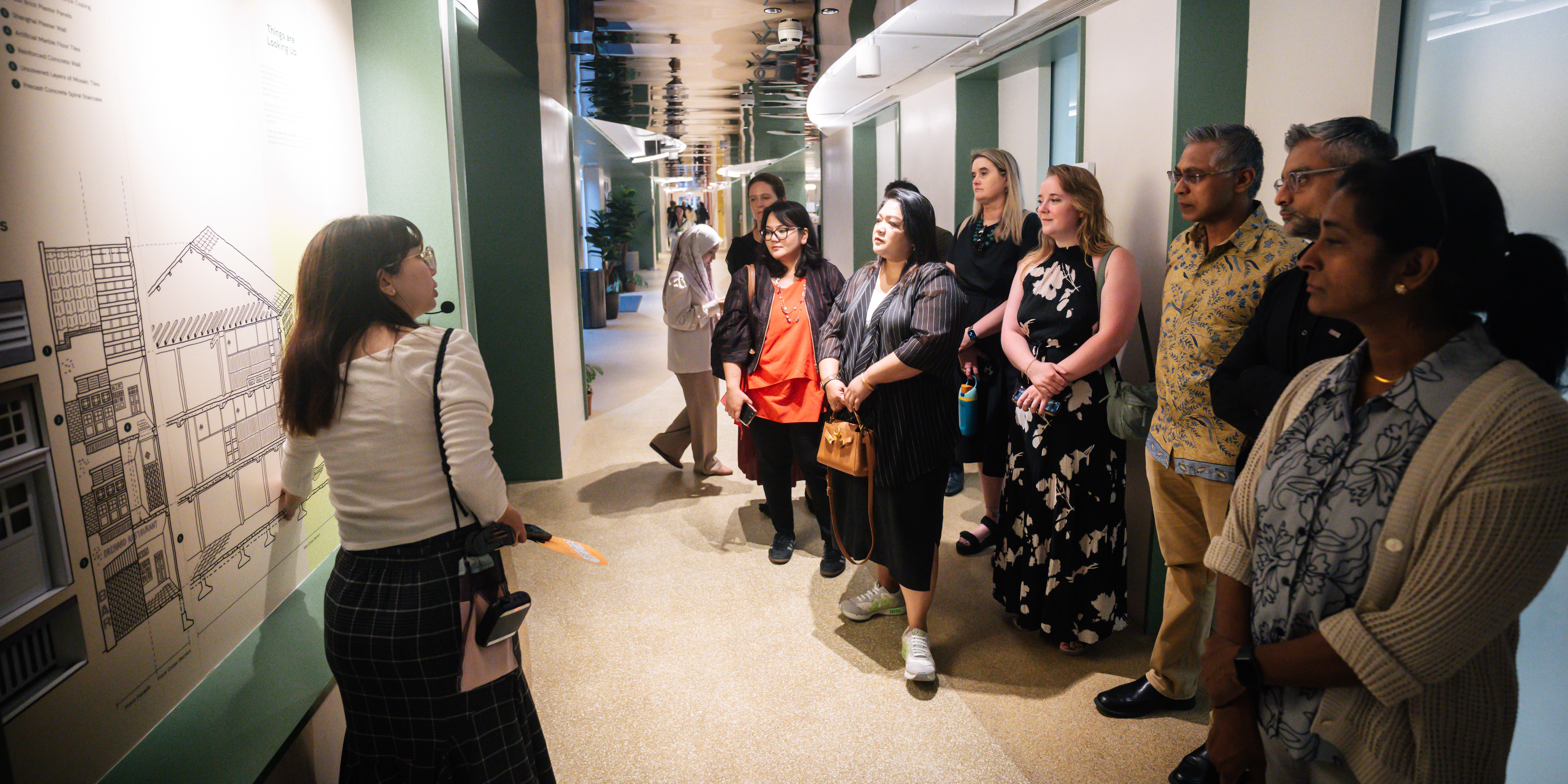
Visitors enjoying a Temasek Shophouse tour as part of the programme for the Executive Climate Leadership Dialogue
A Catalytic Role for Philanthropy
The discussions reinforced a shared conviction: addressing complex urban challenges requires more than capital alone. Cities also need trusted institutions, strong partnerships, and the enabling conditions that allow capital to be deployed effectively and sustainably.
This belief underpins Temasek Trust's approach to driving impact through building capacity, convening partnerships, mobilising capital, and catalysing solutions. By bringing together diverse stakeholders and perspectives, we can help unlock new pathways to address shared challenges.
As cities across Asia and beyond navigate issues ranging from climate change to inclusive development, collaboration across sectors will be essential to unlocking sustainable solutions.

Temasek Shophouse hosted the Executive Climate Leadership Dialogue on the eve of the World Cities Summit 2026, bringing together mayors, policymakers, academics, and partners from across the world.
To stay updated on the latest developments across the Temasek Trust Collective, subscribe to our Impact Brief newsletter and follow us on LinkedIn, Instagram, Facebook, and YouTube.


